
Blog
How to Plan Dance Content With Full Body Tracking
Jul
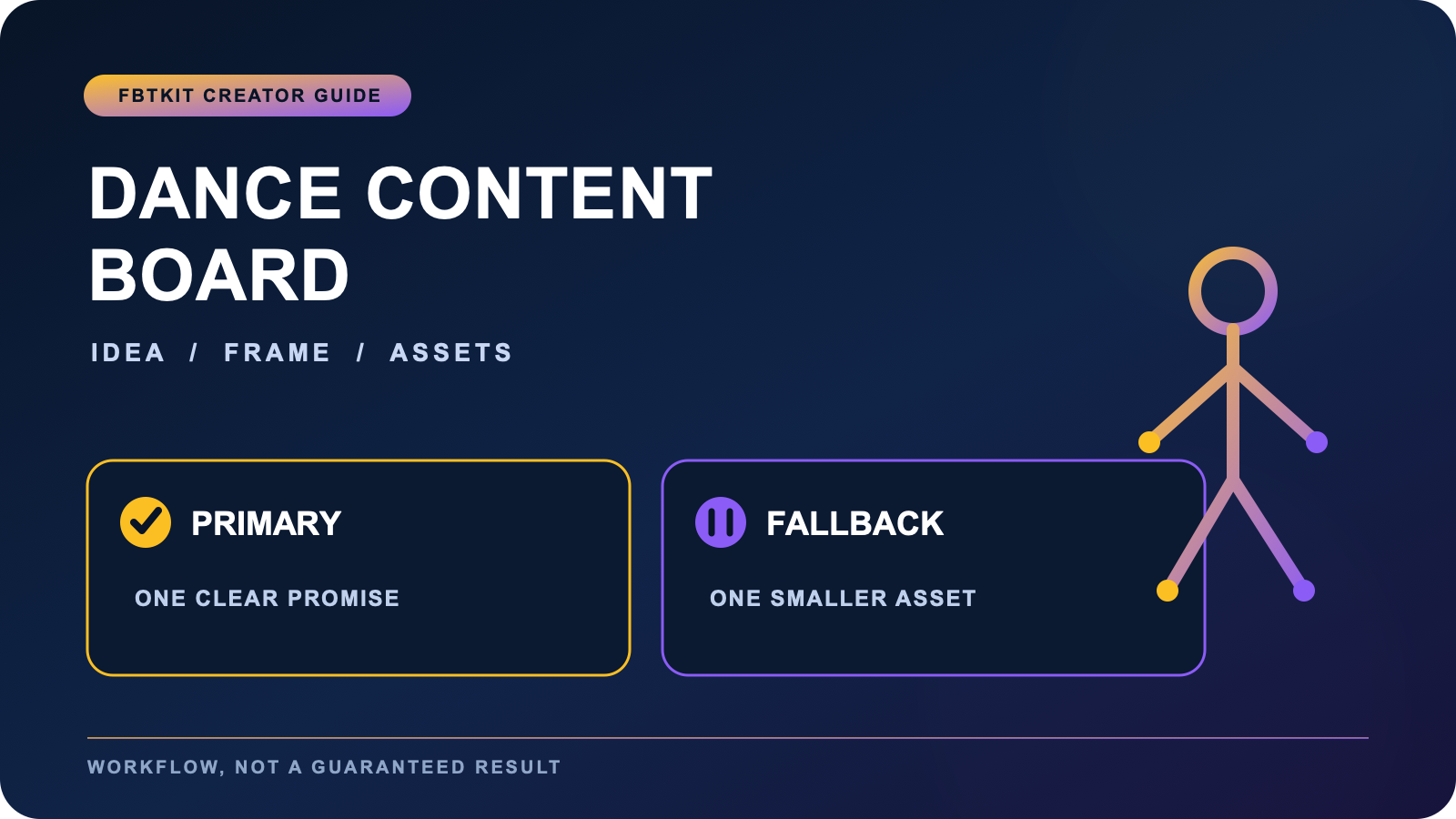
To plan dance content with full body tracking, begin with the deliverable rather than the gear: define the viewer, platform, movement idea, frame, and files you need at the end. Then turn those choices into a small production board with a primary asset, a fallback asset, and a limited shot order. Planning does not guarantee that a clip will perform well, but it reduces avoidable confusion during capture.
This guide covers broad editorial planning across a dance-content session. Beat-by-beat preparation for one clip and recording mechanics come later as separate stages. The useful output here is a decision sheet that another person could read and understand before the headset goes on.
Write a one-line content promise
Complete this sentence: “””The viewer should notice ___ in ___ seconds.””” The answer might be a strong silhouette during one chorus, a costume and movement pairing, or a contrast between slow and fast versions of the same phrase. Avoid goals such as “””make something viral””” because they do not guide a shot, movement, or edit.
Define the audience as well. A fellow dancer may care about timing and transitions. A general social viewer may need a recognizable visual idea in the first seconds. A portfolio reviewer may need a clean sequence and context. If the intended output is specifically a showcase or portfolio file, use the dedicated avatar showcase and portfolio guide rather than turning this plan into a claim of professional results.
Choose the primary platform and frame
Decide whether the primary asset is vertical, horizontal, or live before choreographing around the camera. A vertical frame may reward centered movement and smaller lateral travel. A horizontal frame can hold wider shapes but may give the avatar less visual scale. A live format needs transitions and recovery time that an edited clip can remove.
Write the primary frame on the board and name one acceptable crop for reuse. Do not promise that every horizontal shot can become a vertical clip. Protect the key action inside the likely crop, then accept that some secondary assets will be tests rather than finished posts.
Map movement to three visual beats
Reduce the idea to an opening image, a central change, and an ending image. These are visual beats, not a full choreography lesson. The opening establishes the avatar and direction. The central change gives the clip a reason to continue. The ending creates an intentional edit point.
- Opening: readable stance, direction, and body silhouette.
- Change: turn, level shift, speed contrast, or travel.
- Ending: held pose or clean exit that can be trimmed.
If you need a detailed pre-recording card for one avatar dance clip, use the single-clip preparation guide for beat marks, move inventory, and the exact shot sequence.
Build a primary and fallback asset
The primary asset should be the smallest file that fulfills the content promise. The fallback should reuse the setup without requiring the hardest movement. For example, the primary could be a 20-second dance clip, while the fallback is a six-second pose transition or a still frame captured after the movement block.
A fallback is not a punishment for failure. It protects the session from becoming all-or-nothing. If photography is a planned asset, use the avatar photography workflow for still composition. If the goal is a short social asset, the short avatar clip guide covers that output’s tighter constraints.
Schedule setup, capture, and review separately
Reserve time for three blocks. Setup covers room clearance, avatar selection, charging, placement, and calibration. Capture covers only the planned shot list. Review checks a small sample before the session ends. Do not let setup expand indefinitely because you keep inventing new shots.
| Block | Decision | Stop condition |
|---|---|---|
| Setup | Room, avatar, tracking, frame | Private test is readable |
| Capture | Primary then fallback shots | Shot list is complete or comfort declines |
| Review | Keep, retry, or note | One usable file is identified |
For a repeatable calendar rather than a single project, use the weekly VR content workflow. For capture mechanics after the board is locked, use the home recording guide.
List the evidence you do not have
Before describing the planned content publicly, separate intention from evidence. You can say that the plan includes three shot types. You cannot say that the workflow improves engagement, tracking accuracy, or production quality without suitable data. No first-hand FBTKit creator test or customer result is available for this article, so the checklist is planning guidance, not a performance study.
Note any dependency that still needs a private check: avatar behavior, recording resolution, audio rights, platform crop, or application compatibility. A plan becomes more trustworthy when its unknowns are visible.
Make the gear line item specific but modest
Record what the movement requires from the tracking route: the body areas you need represented, the room you can use, charging time, and software compatibility. Check current written package information on the FBTKit product page. Do not make tracker count or price the main creative idea; use the site’s dedicated buying guides for those decisions.
Your final board should fit on one page: promise, audience, platform, three visual beats, primary asset, fallback asset, shot order, unknowns, and stop condition. If it becomes a long script, move optional ideas to a later-session list.
FAQ
What should a full body tracking dance content plan contain?
Include a one-line viewer promise, primary platform and frame, three visual beats, primary and fallback assets, a short shot order, known dependencies, and a stop condition.
Why choose the content format before the choreography?
The frame and delivery format affect how far the avatar can travel, which body details remain readable, and whether transitions must work live or can be edited.
What is a useful fallback asset for a dance content session?
Choose a smaller asset that reuses the prepared avatar and room without requiring the hardest movement, such as a short pose transition, alternate ending, or planned still image.
Does a production board prove the dance content will perform well?
No. It organizes decisions and unknowns, but it does not prove audience response, tracking quality, or creative results. Those claims require appropriate observation and data.
