
Blog
How to Choose Between Fun and Accuracy in FBT
Jul
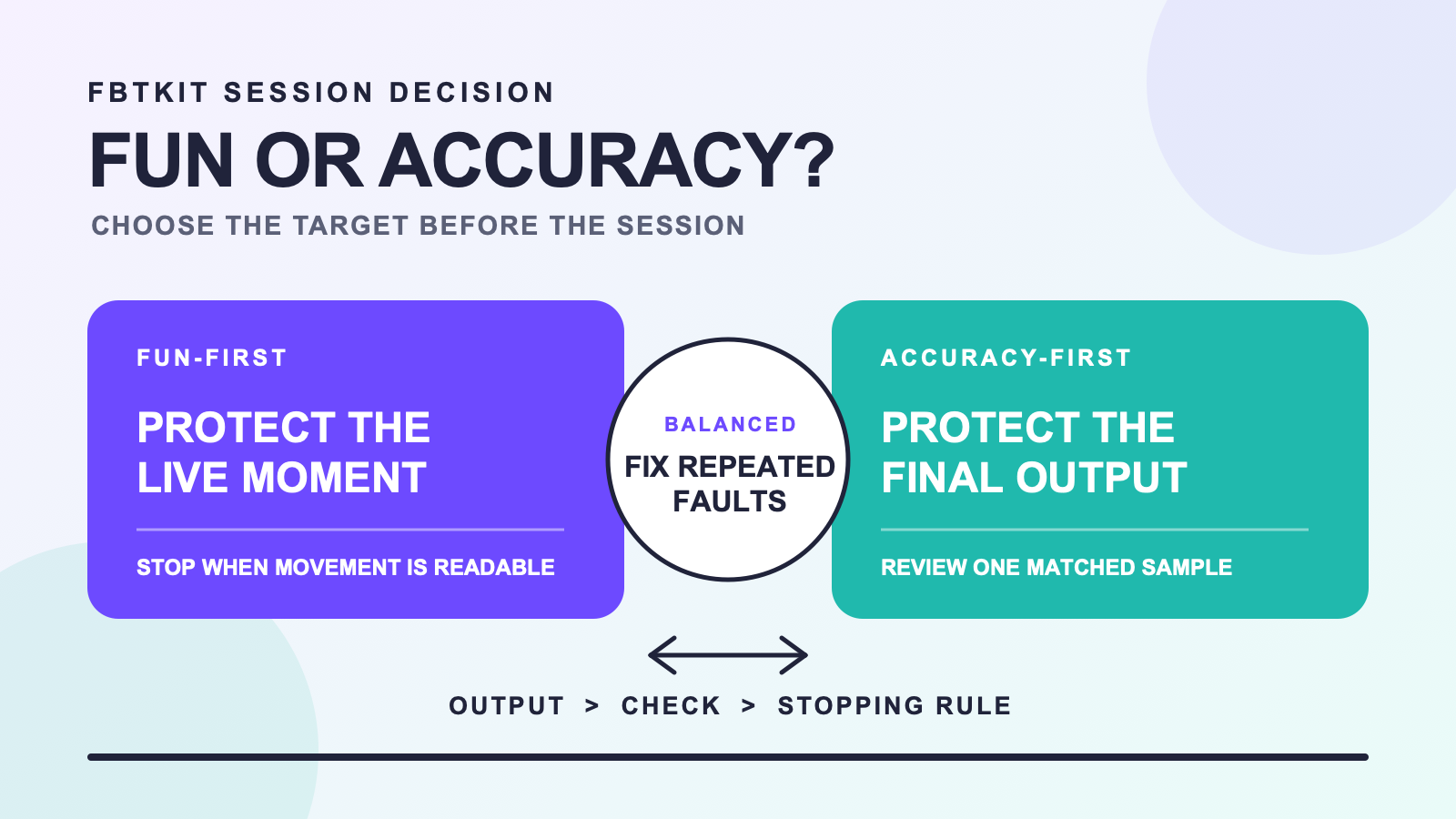
Choose between fun and accuracy in FBT by deciding what tonight’s session must produce. A casual hangout can use a fun-first target: movement feels readable, nothing is uncomfortable, and you can join without another round of tiny adjustments. A clip that you plan to keep or review deserves an accuracy-first target with a short test take. Most ordinary sessions fit a balanced target between those two.
This is a session decision, not a verdict on whether accurate tracking matters. The same person can choose different targets on different nights. The useful question is simple: when the headset comes off, does anything from this session need to survive?
Pick the output before you touch the setup
If the answer is “only the live moment,” protect the live moment. If you want a recording, screenshot sequence, or repeatable practice result, protect the output. Naming that purpose early prevents a casual room from turning into a private calibration project, and it stops a planned recording from starting before you have checked the movement that matters.
Do not use session frequency as a shortcut. Someone can care deeply about one occasional recording, while another person may join social VR every evening and prefer a relaxed setup. The broader personal value decision belongs to your overall routine. This page is about choosing today’s standard after FBT is already part of the plan.
| Session target | Good fit | Acceptance check | Stopping rule |
|---|---|---|---|
| Fun-first | Conversation, room hopping, casual mirror time | Stand, sit, turn, and check that nothing obvious or uncomfortable interrupts you | Join once movement is readable enough for the live session |
| Balanced | Practice, casual clips, mixed social and creator time | Check the movements you expect to repeat and fix one visible, recurring problem | Stop when the repeated problem is gone, even if small imperfections remain |
| Accuracy-first | A take you will keep, compare, edit, or show later | Record a short sample that includes the hardest movement in the planned output | Start the real take when the sample meets the purpose you wrote down |
Fun-first means protecting momentum
A fun-first session still has a setup. Wear the trackers consistently, follow the normal route for your system, and check the movements you will actually use. The difference is what happens next. Once you can stand, sit, and turn without an obvious interruption, you enter the room instead of searching for a better-looking mirror pose.
This target suits a scheduled social VR meetup, a casual hangout, or an evening when you know that setup patience is low. Minor visual quirks can go on a note for tomorrow. Discomfort, a tracker that has moved, or a fault that keeps breaking the avatar’s pose should still be handled before you continue.
The distinction matters. Fun-first is not careless. It is a decision to fix interruptions and leave cosmetic details alone. Without that boundary, “one small adjustment” can repeat until the social part of the session has already moved on.
Accuracy-first needs a test that matches the output
An accuracy-first session should not begin with random mirror inspection. Choose the movement the output depends on, then make a short sample around it. A recording made at home needs a different check from a dance practice run. The home avatar clip workflow covers capture preparation, while the VRChat dancer guide covers dance-specific practice.
Review the sample for the problem you can act on. Did a tracker change position? Did sitting alter the waist point? Did the avatar lose the shape needed for the take? Change one physical variable, repeat the same sample, and compare. Changing several things at once makes it hard to know what helped.
If the work is meant for an avatar showcase or portfolio clip, define the acceptance point before recording. “The turn reads clearly and the feet stay believable in frame” is useful. “Make everything perfect” has no finish line.
Balanced mode fixes repeated faults, not every flaw
Balanced mode is useful when you want a decent clip but the evening is not a production session. Follow your normal setup and calibration route, test the important movement, and watch for faults that repeat. A one-off wobble may not justify restarting. A knee or foot problem that appears every time you make the same move probably does.
Write down one sentence before you start: “I will fix problems that repeat in the movement I care about.” That sentence prevents the acceptance standard from changing each time you look in the mirror. It also gives you permission to move on once the selected motion works for the session.
Balanced mode can change direction. If a casual clip turns into something you want to keep, pause and run an accuracy-first sample. If a planned recording becomes a relaxed room with friends, lower the target and stop reviewing every movement.
Recover from drift without restarting the night
When something changes mid-session, first decide whether it affects the session target. A cosmetic issue at the edge of a social hangout may wait. A shifted tracker, discomfort, or a repeated fault in the movement being recorded deserves a pause.
- Stop the movement that exposed the problem.
- Check whether anything physical changed, including strap position, clothing, chair contact, or the place where you are standing.
- Correct one observable issue.
- Repeat the same small movement check.
- Return when the result meets the original stopping rule.
Do not add hardware as a reflex. The tracker upgrade timing guide is for a separate, evidence-based upgrade decision. A difficult session is not enough by itself to show that the current tracker count is the cause.
Use one pre-entry card
- Name the output: live moment, casual clip, or reviewable take.
- Choose fun-first, balanced, or accuracy-first.
- Pick one movement that represents the session.
- Write a stopping rule you can actually observe.
- Move any non-blocking issue to a later note.
If you are still comparing the hardware route, review the current FBTKit product listing only after the routine is clear. The listing can show the current offer; it cannot decide how much precision tonight’s activity needs.
Choose the target, then start
Write down the output, acceptance check, and stopping rule. That small card gives fun and accuracy a useful job without letting either one take over the whole session.
FAQ
Can a fun-first FBT session still include a setup check?
Yes. Check the movements you expect to use and fix discomfort or an obvious repeated fault. Fun-first changes the stopping point; it does not mean skipping the normal setup route for your tracking system.
When should I switch from balanced to accuracy-first?
Switch when the session creates something you plan to keep, compare, edit, or show later. Define the movement that matters and review a short sample before committing to the full take.
How do I stop adjusting tiny avatar flaws?
Write an observable stopping rule before you begin. Fix problems that block the chosen activity or repeat in its key movement, then leave unrelated cosmetic details for a later troubleshooting session.
Should I restart after every tracking wobble?
No. First ask whether the wobble repeats and whether it affects the session target. A repeated fault in a reviewable take matters more than a one-off cosmetic issue during a casual room.
Can the session target change after I join VR?
Yes. If a casual moment becomes a recording, pause and run a suitable sample. If a planned take becomes a social hangout, lower the target and stop reviewing details that no longer serve the activity.
