
Blog
Full Body Tracking for Character Performance
Jul
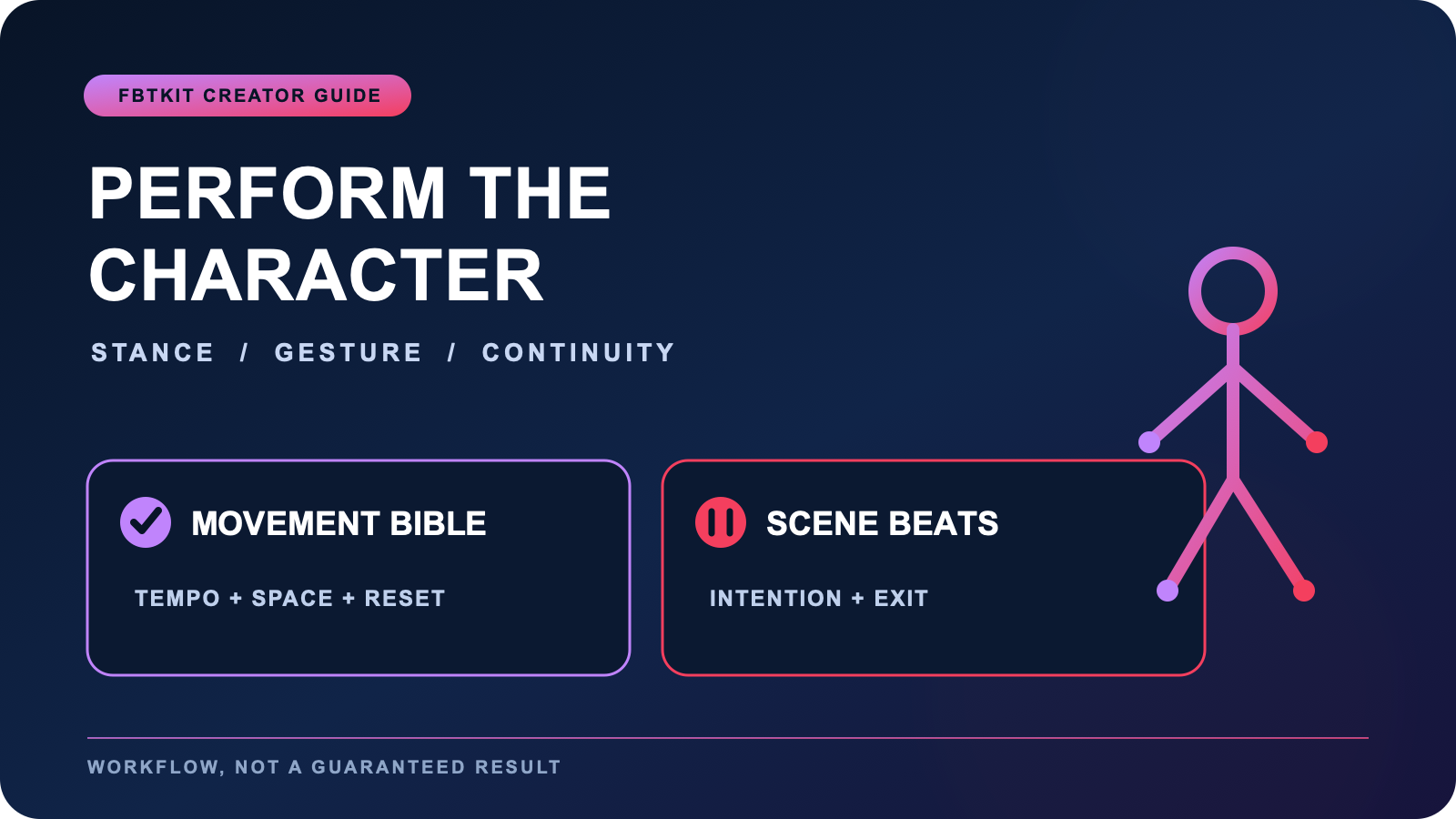
Full body tracking for character performance becomes useful when the character has a consistent physical point of view: how they stand, lead a turn, occupy space, react, and return to neutral. Define those choices before the scene, rehearse a few transitions, and review body-language continuity afterward. Constant movement is not the goal. Readable, repeatable intention is.
This article covers embodied acting choices for an avatar character. It is different from neutral motion reference, still pose practice, or general social VR roleplay. No first-hand performance result, audience response, or claim of improved acting is attached to the workflow.
Write a character movement bible
Use one page with five fields: neutral stance, movement tempo, leading body area, personal distance, and reset behavior. A cautious character might keep a narrow stance, turn with the head before the torso, and step back before speaking. A confident character might hold more space and complete turns without extra gestures.
Keep the descriptions playable. “””Carries the weight slightly back””” is more useful than “””moves mysteriously.””” The movement bible should guide choices without becoming a rigid list that prevents a genuine response to the scene.
Choose one gesture vocabulary
Select three to five gestures that belong to the character: a greeting, an emphasis, a refusal, a listening posture, and a transition back to neutral. Practice their size and timing with the avatar. A gesture that feels modest in the room may read as large because of avatar proportions, while a subtle hand action may disappear from the chosen camera.
Do not fill silence with constant motion. Repeated gestures lose meaning and can make tracking symptoms harder to distinguish from performance choices. The goal is a vocabulary the viewer can recognize, not maximum activity.
Rehearse transitions between states
Character continuity often breaks between the important poses. Practice moving from listening to speaking, neutral to surprised, or standing to seated. Define what starts the change and where the body settles. A scene feels more coherent when the transition belongs to the same character as the final pose.
If the purpose is to study the visible sequence without character intention, use the motion reference workflow. If the purpose is general pose repetition, use the avatar pose practice guide. Character performance focuses on why the body makes each choice.
Use a scene beat card
Write the scene as a few playable beats rather than a long movement script. Each beat needs an intention, body cue, and exit. For example:
| Beat | Intention | Body cue | Exit |
|---|---|---|---|
| Notice | Assess the room | Head leads, feet stay planted | Weight shifts forward |
| Challenge | Claim space | Torso opens, one clear hand gesture | Gesture returns to neutral |
| Withdraw | End the exchange | Small step back | Turn completes |
The card is a rehearsal tool, not evidence that the scene will affect an audience in a certain way. Leave room for timing changes created by another performer.
Prepare the technical route outside the scene
Complete room, connection, placement, avatar, and calibration checks before acting. Use the new avatar test if proportions or behavior are unfamiliar, and return to the setup and calibration workflow when the body response is uncertain.
A technical fault can accidentally become part of the performance if you keep compensating for it. Separate the intended character habit from a tracker, avatar, or room symptom. When a scene will happen in social VR with other people, the roleplay and immersive social VR guide covers participant and context decisions.
Record a continuity pass
Capture one private pass containing neutral stance, each main beat, and the reset. Review without audio first. Can you identify when the intention changes from body language alone? Do the gesture size, movement tempo, and personal distance stay consistent? Then review with audio and check whether movement supports rather than competes with the line.
If the scene is being recorded as a general avatar clip, follow the home capture workflow for file boundaries and playback checks. This page limits itself to character choices and continuity.
Keep notes about decisions, not praise
After the pass, write one retained choice, one inconsistent moment, and one transition to rehearse. “””Keep the head-led turn””” is actionable. “””Great performance””” is not. If another person provides feedback, connect it to a timestamp or beat rather than treating a general reaction as proof.
For a recurring character, keep a continuity sheet beside the movement bible. Note the scene context, avatar version, costume elements that affect the silhouette, and any deliberate exception to the normal movement rules. An injured, tired, disguised, or celebratory version of the character may move differently, but the difference should be a choice you can explain. Do not overwrite the base behavior every time a scene creates an exception. The sheet helps later performances return to a known physical starting point while leaving space for circumstances to change the acting.
When several performers share a scene, agree on movement space and interruption cues before the active block. Character commitment does not override another participant’s comfort or the real room boundary. If timing changes because someone enters unexpectedly, return to the character intention instead of forcing the rehearsed path through the interruption.
Before choosing a tracking route, compare compatibility and current written package information on the FBTKit product page. The setup can support body input for a character, but it cannot define the character, guarantee continuity, or predict audience response. For a broader creator system, use the social VR creator setup guide.
FAQ
What belongs in a character movement bible?
Define the character’s neutral stance, movement tempo, leading body area, preferred personal distance, reset behavior, and a small vocabulary of recognizable gestures.
Why should a character performer rehearse transitions?
Transitions show how the character changes intention and returns to neutral. Without them, the important poses may look disconnected even when each pose works by itself.
Should an avatar character move continuously during a scene?
No. Stillness, listening, and a controlled reset can be part of the character. Constant gestures may lose meaning and make intended body language harder to read.
How can I review body-language continuity?
Record a private pass and watch it first without audio. Check whether gesture size, tempo, space, and transitions remain consistent, then review with sound to see whether movement supports the lines.
